跳至主要内容

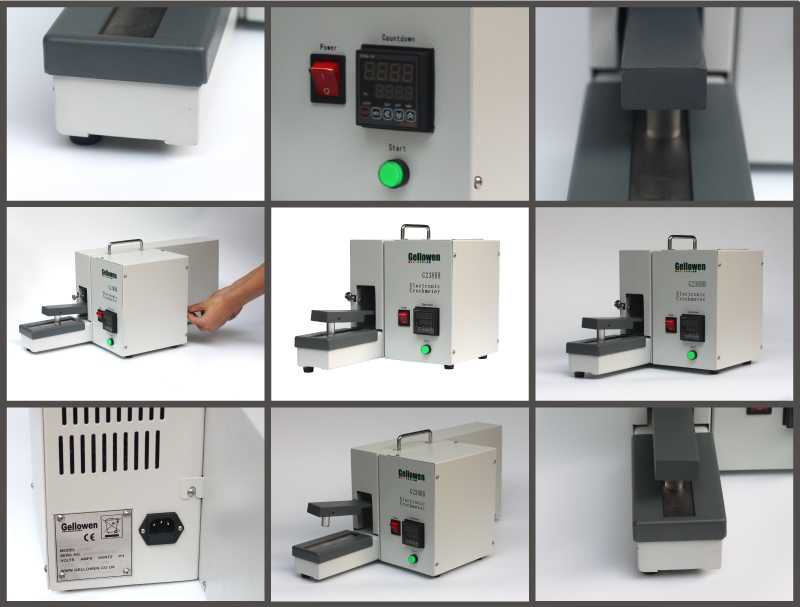
Electronic Crockmeter/Rubbing Fastness Tester

 Electronic Crockmeter


Brief Introduction:
Electronic Crockmeter/Rubbing Fastness Tester is designed with a base, rubbing rotation mechanism and a counter. Fix the specimen and sand paper with the specimen clamp on one side of the base. Rotate the knob to rub the friction head with the white cotton cloth against the specimen in reciprocation motion with specified strokes. After ten times of friction between the white cloth and the specimen, assess the color transfer to the white cloth with a gray scale and the stability of dyed fabric specimen or surface coating so as to provide reference data for material assessing and selection.
 
Testing Standards: ASTM F1319, AATCC 8/165, BS 1006 D02, GB/T 3920, ISO 105 D02/X12, JIS L0849, M&S C8/C8A, NEXT TM6

Applications:
Electronic Crockmeter/Rubbing Fastness Tester is used to determine the colour fastness of cotton, chemical fiber, blended, other coloured fabrics and leather to dry or wet rubbing, suitable for frequent use and long run tests. A piece of dyed test cloth and a piece of white cotton cloth are rubbed against each other though the tester in a specific pressure and stroke.
The color fastness of the sample is graded by comparing the coloring of the white cotton with the gray scale. Fitted with digital electronic preset-table counter for strokes.

Product Information and Features:
Electronic Crockmeter is used to determine colour fastness of materials to wet and dry rubbing, suitable for frequent use and long run tests.
A.Diameter of friction head:16mm or 25mm;
B.The weight to produce a loading of 9N;
C.Electric drive, working voltage of 220V;
D.Equipped with electronic counter, could completely simulate the results of manual friction for 10 times, with high reproducibility;
E.The fixed device for the standard crocking cloth;
F.A steel spring clip for rapidly fastening samples;
G.Control mode consists of AATCC, ISO standards, and customized setting;
H.Automatic alarm to remind the test over.
 
Accessories and Consumables:
1.The Crocking Cloth Clamps;
2.Standard Emery Paper For Crockmeter;
3.Pre-cut White Crocking Cloths for AATCC/ISO;
4.Pre-cut White Crocking Cloths for SDC;
5.Crockmeter Calibration Fabric;
6.Grey Scale (Staining) ISO/BS Standards;
7.Grey Scale (Staining) AATCC Standards.


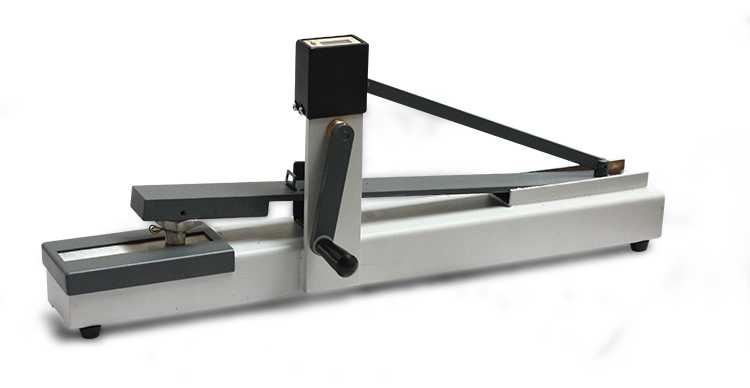
Recommended Instruement:[Mannual Rubbing Fastness Tester]
评论

此博客中的热门博文

Classfication Of The Textile Testing

Textile testing is the term for a whole series of tests that examine the physical, mechanical and chemical properties of textiles. These tests are sometimes done before a textile goes into widespread use, or they're done on textiles arriving from other countries for sale in US markets. Countries like the United States have established standards for what should and should not be in textile products. Tests can show whether companies making textiles are in compliance or not. Many textile tests have many types. Some of them are physical tests, in which a sample of textile material is examined closely for feel and appearance. Such tests are done on individual fibers or strands of material and on yarns, threads made of several fibers twisted together. Textiles are subjected to light and other elements to see how they react. Some of these tests are done in a weather-ometer, a machine that tests for weathering and lightfastness of textiles. It's basically an enclosed box. Textiles...

Standard Procedure Of Oxygen Index Test Methods

Oxygen index tester test methods, which describes the tendency of a material to sustain a flame, are widely used as a tool to investigate the flammability of polymers. They provide a convenient, reproducible, means of determining a numerical measure of flammability. A further attraction is that the test method uses inexpensive equipment and only requires a small sample size. These methods have been used to systematical investigate the relative flammabilities of fire-retarded materials, frequently comparing the effectiveness of fire-retardants and fire-retardancy mechanisms. The quintessential feature of oxygen-index methods is that the sample is burnt within a controlled atmosphere. The standard procedure is to ignite the top of the sample, using a gas flame which is withdrawn once ignition has occurred, and to find the lowest oxygen concentration in an upward flowing mixture of nitrogen and oxygen which just supports sustained burning. The criticality criterion typically tak...

How To Process The Elmendorf Tear Strength Test

The Elmendorf tear tester has been developed specially for the paper industry and is outstanding for simplicity of operation and high measurement accuracy. The exchangeable pendulum is equipped with a pneumatic sample clamp. The initiation and return of the pendulum, as well as sample cutting is completely automatic. The device is operated via an integrated touch screen, where the test method can be selected, specific settings can be adjusted, and, after the measurement, results and statistics can be  displayed.Each pendulum is supplied with the appropriate control weight so that, with the help of the service program, it can easily be checked for functionality and balance. The Elmendorf tear test Procedure:     Cotton fabric was taken.     Warp and weft direction of the fabric was identified.     Two strips were cut from the fabric in both directions having dimensions of 100 x 63.5 mm.     The sample was then fixed in the jaws of the ...